Sunday, February 15, 2015

Political Textiles for President's Day

President’s Day

February 16th is President’s Day honoring all our presidents.

Textiles have always been used to convey ideologies, historic and current events.  They also served as advertisements, as their graphic qualities caught the attention of the buying public.  Therefore, it is obvious that textiles were used to serve a political agenda.

In the US early textile printers, such as  John Hewson, used the copper plate printing techniques that were used in Europe, to produce pictorial handkerchieves and bandannas.  Copper plate printing allowed for finely detailed patterns, which could be produced in quantity.  By the early 19th C  a popular subject was political ( faces of potential candidates and political slogans).  There were many decorative motifs, such as flags, eagles, and maps, that could be used to enhance the overall message.  These textiles were also hanging squares used as banners and wall hangings as well as pocket hankies and bandannas.


1892 Presidential Campaign Bandanna

Grover Cleveland vs
Adlai Stevenson


                           The American Bandanna: Culture on Cloth from George Washington to Elvis, Hillary Weiss, Chronicle Books,
 San Francisco, 1990
This reference presents " a veritable history on cloth" with images reflecting over 200 years.  There is a chapter with many political-themed bandannas.


With the popularity of quilting in America came an opportunity for women to express their political views.  Although they could not vote until 1920, they were able to use their needles to commemorate bygone heroes and urge their suffrage.  Often they incorporated political banners, ribbons and bandannas.


An article in Quilter's Newsletter Magazine, July-August/87, Barbara Brackman


Washington's Own


Dolly Madison's Star


Madison


Contemporary textiles with images of historic figures can be found, as well as, images of current events in the political arena.


This textile is a panel measuring 43x23 inches depicting George Washington crossing the Delaware River.  The colors are startling with vivid reds, blues and gold.  The fabric is textured reminiscent of “bark cloth” ( the fabric your grandma used to cover her porch furniture or perhaps used as draperies.).  This textile was produced by the Reliable Textile Company of NY ( incorporated in 1926) under the trademark Wesco-Reltex.  Supposedly these panels were meant to be hung or framed.


It is not uncommon for foreign countries to produce textile art in support of US political figures.  I found this textile in the collection of the National Museum of Natural History Support Center
 ( Smithsonian Museum, Washington D.C.).  It was a gift from the People of Kenya.

Sunday, February 1, 2015

Crin de Caballo


Crin de Caballo - Hair of the Horse

There are many fibers used to create textiles, many are common, many are not.  The use of horsehair has a long history.  Probably the upholstery “stuffing” of your grandmother’s sofa was horsehair, now replaced with modern synthetics.

Central Asians first domesticated horses around 3,000BCE.  The Moors brought horses to Spain and the Spanish brought horses to the new world. 

              In the western United States horsehair was, and still is, used in making tack (bridles, halters ) as well as accessories such as hat bands, belts and keychains.  These can be found in many shops throughout the southwest, selling local products.

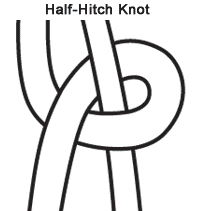
              The method of construction is termed hitching, which takes half-hitch knots, using sets of plied horsehair, called “pulls”.  Since mane hair is generally too short and too soft, tail hair is used.  Pulls can also be braided, but braiding does not produce a silky, durable product, although braiding is definitely easier and quicker.
        

              South Americans have long used crin to create textiles, including beautiful mosaic designed carpets, using weaving techniques (usually flat woven techniques such as Soumak).   Crin offers good wear due to its strength, has nice tactile texture and accepts dyes     


              In a recent showcase of Chilean handcrafts were many examples of fine crin-work made into fanciful accessories.


Hair can be purchased cleaned, in bundles from firms overseas, usually in black or white.  Imported horsehair is, most often, used in making bows for violins and various stringed instruments. Musical instrument dealers who rehair bows are another source but natural horsehair should be ordered, not synthetic.  Also check the internet for US suppliers who sell hanks of  hair in various lengths and colors, usually by the pound ( a pound would make a lot of keychains!!)


Sunday, January 25, 2015

An Introduction to Lucy

An Unexpected Meeting

Today I’m writing about history, not textile history, but human evolutionary history.

Every once in a while, you meet someone truly by chance.  Last fall we were visiting friends in Asheville, NC. Visiting, and, of course, shopping in Historic Biltmore Village.  One of our favorite type of retail stores is a nature-related shop.  We like hunting out the squirrel-proof bird feeders, and trying on those vests with all the pockets.  We don’t have a use for the feeders where we live now, but when we lived back east those squirrels drove us crazy, so I guess we are drawn to them by habit.

We happened into a lovely shop, The Compleat Naturalist, Ltd. 


  While browsing the book selection (we don’t need to frustrate hungry squirrels, but I never met a book which could not add to my intellectual curiosity) an elderly gentleman approached us.  I assumed he was a service clerk, but as it turned out he was the owner, Hal Mahan.
He asked if I knew about “Lucy”.  As we were looking in the anthropology section, I knew he meant Lucy, one of the earliest hominids discovered, as it happened, 40 years ago.

Mr. Mahan and his wife, Laura, had retired to Asheville but he could not retire from his love of natural science.  His academic studies were at Michigan State University with a master’s and doctorate degree in zoology.  In the 1960’s Mahan, while working at Central Michigan University, established a museum training program for graduate students who had difficulty finding jobs in academia. He later became director of the Cleveland Museum of Natural History. Eight of these post-graduate students eventually became directors of museums.  It was one of his protégés that brings us to Lucy.  Mahan was to meet with Richard Leakey, the director of the Kenya Natural Museum in Nairobi who told of his expeditions and of his interest in Mahan’s training program.  Don Johansen was recommended to Leakey and soon he was part of a field expedition in Hadar, Ethiopia.  He was soon to telegraph Mahan ( who was doing field work in a neighboring African country) of his discovery.  Lucy was found nearly 44% complete, rather than the odd tooth or bit of bone and came to live at the Cleveland Museum for study.


                                      Simon and Schuster Paperbacks, New York,  1981


Lucy: The Beginnings of Humankind, written by Johansen and Maitland Edey is the story of the discovery and final accreditation of Australopithecus afarensis, nicknamed Lucy.
Usually, these anthropologic tales are a bit too scientific for the non-paleontologist (like me). But this is a very well written volume that begins with the earliest finds in the 18th and 19th C and the controversies that seem to follow every scientific discovery.

I am now immersed in the reading of Lucy, thanks to a chance meeting with one of the most interesting persons I have encountered in quite a while.


Sunday, January 18, 2015

Cook Islands Tivaevae

Destination: the South Pacific

Most visitors miss some of the most beautiful South Pacific islands of paradise for the simple reason that they are in the middle of a vast sea and, frankly, are not well known.  One lovely island nation is the Cook Islands. The “Cooks” are comprised of 15 islands with a total land area of a little over 90sq.miles, however their geographical boundaries are nearly 700,000 sq. miles of Pacific Ocean.


They have a parliamentary form of democratic government and have a unique relationship with New Zealand as a “free, associated state”, in that N.Z. has responsibility for their external affairs.  Cook Islanders are also New Zealand citizens, although the reverse is not true.


                                                    Parliament building in Rarotonga


The capital is Rarotonga, but our final destination was Aitutaki, which is reported to have “the most beautiful lagoon in the world”, according to tourist information.  Our reason for this short air flight (in the smallest plane I have even flown), was a meeting with a ham radio operator and a meeting with textile artists, Mrs. RuRu Carl  and  Mrs. Tara Thomas, who worked with the island’s tivaevae makers.  Guess whom I was meeting.


At first glance, Tivaevae, is a version of Hawaiian quilts (also sometimes mistaken for Tahitian”Tifaifai”).  Their resemblance is understandable.  Although the islands are thousands of miles apart, missionaries and their families traveled throughout Polynesia.   The missionary wives taught native women sewing and embroidery techniques, including the making of bed coverings. While all variations are based upon appliqué of common native plant life motifs onto a ground fabric, which is then sewn onto a backing fabric, there are differences.  The most outstanding difference is that Hawaiian quilts are quilts in the sense that they have 3 layers: the patterned front, the plain backing and an inner layer of some type of batting.  These are heavily quilted using very small stitches to create parallel quilt lines, which follow the appliqué pattern.

Tivaevae are, what we would call, bed spreads.  There is no inner batting, nor, usually quilting.  The motifs are folded squares of cotton fabric, cut into designs, similar to cutting out snowflakes 
( believe me, there is no snow to be found).  These appliquéd spreads are called” Tivaevae manu”.using only one color for the pattern.


“Tivaevae taorei” are pieced spreads made from small pieces of  four or more colored fabrics forming triangles, squares or diamond patterns.  This is intricate work, as each member of the sewing group (vainentini) works on her own square.  Therefore, each square must be counted and sewn correctly if the sections are to fit and form the overall pattern.


“Tivaevae tataura” patterns are cut out and embroidered before being sewn onto the ground fabric, although it may be appliquéd and then embroidered with 2 strands of pearl cotton, often variegated..  Embroidery stitches may include feather, chain and stem stitches, as well as variations of other embroidery stitches.


Each floral motif takes one artist up to one day to create.


Tivaevae tataura


A variation of “Tivaevae tataura” is “tuitui”, in which motifs are sewn onto ground fabric squares, The squares are then crocheted together before being sewn onto the backing fabric.


Tivaevae: Portraits of Cook Islands Quilting, Lynnsay Rongokea, Daphne Brasell Associates Press, Wellington, N.Z., 1992


Sunday, January 11, 2015

Virginia Lee Burton of Folley Cove Designers

Folley Cove Revisited

Several years ago I wrote about a mid-19thC American cooperative, Folley Cove Designers from Cape Ann, Ma. ( 5/25/12)


Recently I received correspondence from Christine Lundberg, an independent film producer.  Christine has produced a documentary on Virginia Lee Burton, her life and career, Virginia Lee Burton: A Sense of Place. Virginia (Jennie) Lee Burton is well known as an author and illustrator of children’s books.  In fact, she was one of the first to use high quality artist techniques to illustrate her stories, which have been read and loved by generations of children and their parents.

Virginia was also the founder of a group of artists, Folley Cove Designers who produced the most incredibly designed textiles ( and later other products featuring their designs).

Now, Christine is preparing to produce another film, this time on the Folley Cove artists and the history of their cooperative.  If any readers have relevant information regarding Folley Cove and the artists perhaps you could communicate with Christine.  I am sure she would be most interested in your contributions and comments on the subject.

Christine Lundberg, Red Dory Productions


Virginia Lee Burton: A Sense of Place was produced by Red Dory Productions, Gloucester MA in partnership with Searchlight Films, Bernardston MA.  It has been aired on PBS, so check with your local PBS station to inquire about possible re-airing schedules.  You can also obtain more information of Virginia Lee Burton by visiting www.virginialessburtonthe film.com


Sunday, January 4, 2015

"A Celebration of American Quilts"


“A Celebration of American Quilts” is a small exhibition accompanied by a very large reference volume, “Four Centuries of Quilts”.  The DeWitt Wallace Art Museum, one of the Art Museums of Colonial Williamsburg, is showing only a small number of quilts from their large collection (12 quilts).    The real gem is not the exhibit, however, but the large reference volume written by curators Linda Baumgarten and Kimberly Smith Ivey, with 356 pages and over 300 color illustrations.

The history of quilting fabrics is a long one.  Early warriors and fire fighters wore garments of heavily quilted cotton and other fibers for protection.  Quilted cloth was a protection from the elements and was also used as padding.  Quilts, as bedcovers, did not originated in the US, although quilting has been extremely popular in this country. Fabrics introduced into Europe from the east were made into bedcoverings as well as whole cloth quilts of wool and other local materials.  These, then, were introduced into the newly populated US in the 17th and 18th centuries.  Once valued only for their utilitarian purposes, quilts today are regarded as artistic expressions.  The skill of the makers in creating images of color and pattern is not the entire process, however.  The real story lies in the history, thoughts and emotions sewn into the textiles by their makers.      

There are many folk tales about magic and supernatural powers attributed to textiles, especially bedcovers, which protect against cold but also evils that might befall those at rest.  These stories about the quilt makers are unfortunately often lost, as many of these textile works of art were neither dated nor signed.

“Four Centuries of Quilts” catalogs the museum’s collection of nearly 180 quilts and the authors have attempted to relate the stories of the quiltmakers, bringing their efforts into our world today.


 Four Centuries of Quilts, Linda Baumgarten and  Kimberly Smith Ivey, Colonial Williamsburg Foundation, Yale University Press


Linda Baumgarten is the curator of textiles and costume.  She is also the author of “What Clothes Reveal”.  Kimberly Smith Ivey is the curator of textiles and historic interiors.


A  Celebraton of American Quilts can be seen through May, 2016

Saturday, December 27, 2014

Another Look at Kiminos

Another Look at Kimonos


"Enjoying the Cool at the Ryogoku Bridge", Utamaro Kitagawa,
        (1753-1819)


In my blog,  Modern Kimonos ( November, 9, 2014), I reported on an exhibition at LACMA (Los Angeles County Museum of Art) which featured over 30 modern kimonos from their collection.

Another famous institution, The Metropolitan Museum of Art in New York City is showing an exhibition (through January 19, 2015) of their collection of Japanese kimonos beginning with the Edo Period , 1615-1898.  Not only featured are glorious, beautifully embroidered garments but also garments such as firefighters’ coats, which might be considered rural textiles.

So-called “country textiles” differ from those created in the urban weaving centers.  While many have similarities with those silk, embroidered garments, there are significant differences in style, fiber content and patterning techniques.


Japanese Country Textiles, Anna Jackson, Victoria and Albert Museum, Far Eastern Series, Weatherhill,1997


Japanese Country Textiles by Anna Jackson, draws from the collection of the Victoria and Albert Museum. 
Four chapters: 1. Definition and Acquisition
                        2. The Context of Cloth
                        3. Textile Techniques
                        4. Continuity and Change
explore the variety of textiles commonly referred to as “country” or even “folk”.


This volume offers another insight into Japanese textiles.  The photographs are instructive and there is also a selected bibliography for further sources of information.